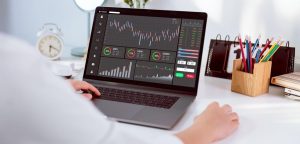
Navigating today’s financial markets requires more than just an intention to invest—it demands the right infrastructure. A trading account forms the foundation of an investor’s interaction with capital markets, enabling the buying and selling of securities across multiple asset classes. Understanding the key attributes of a trading account is essential for making informed investment decisions, managing risk effectively, and maximising trading efficiency in an increasingly digital and regulated environment.
This article explores the defining characteristics, necessity, and modern features of a trading account, along with the process of opening one in the current market scenario.
Table of Contents
Defining a Trading Account
A trading account is the primary interface between an investor and the stock market. It is linked to both a bank account and a Demat account, enabling seamless movement of funds and securities. When a buy order is executed, funds are debited from the bank account and the purchased securities are credited to the Demat account; the reverse occurs during a sale.
Before the introduction of electronic trading, investors were required to trade physically on the exchange floor, dealing with paper-based share certificates—a process that was time-consuming, error-prone, and inefficient. The introduction of Dematerialisation in 1996 marked a turning point, allowing securities to be held electronically and traded efficiently.
With the growth of the internet and online trading platforms, trading accounts have evolved into powerful digital tools. As mandated by the Securities and Exchange Board of India (SEBI), holding both a trading account and a Demat account is compulsory for equity market participation in India.
Why a Trading Account Is Essential
The primary purpose of a trading account is to facilitate investment and trading in financial instruments such as equities, bonds, derivatives, currencies, and commodities. Investors use trading accounts to:
- Capitalise on price movements
- Build long-term wealth
- Generate short-term trading income
- Diversify portfolios across asset classes
- Optimise tax planning through regulated instruments
In essence, a trading account is indispensable for anyone looking to participate meaningfully in financial markets.
Key Attributes of a Trading Account
In the present scenario, a trading account offers far more than basic buy-and-sell functionality. The following attributes define a modern trading account:
1. Multi-Asset and Multi-Exchange Access
A trading account provides access to multiple asset classes and exchanges through a single platform. Investors can trade across leading Indian exchanges such as:
- Bombay Stock Exchange (BSE)
- National Stock Exchange (NSE)
- Multi Commodity Exchange (MCX)
- National Commodity & Derivatives Exchange (NCDEX)
This consolidated access enables diversification across equities, commodities, derivatives, and currencies without maintaining separate accounts.
2. Seamless Digital Trading Experience
Modern trading accounts support web-based and mobile platforms that allow investors to:
- Place trades in real time
- Modify or cancel orders instantly
- Trade in equity, intraday, futures, options, and currency segments
Fast order execution, intuitive interfaces, and real-time market data are now standard attributes expected by investors.
3. Portfolio Monitoring and Management
A trading account provides a consolidated view of an investor’s holdings, positions, and performance. Key benefits include:
- Real-time portfolio valuation
- Profit and loss tracking
- Asset allocation visibility
- Flexibility to rebalance portfolios based on market conditions
This transparency enables informed decision-making and disciplined investing.
4. Risk Management and Order Controls
Risk management is a critical attribute in today’s volatile markets. Trading accounts typically offer:
- Stop-loss and limit orders
- Margin utilisation monitoring
- Exposure and position limits enforced by RMS systems
These tools help traders control losses and manage leverage responsibly.
5. Cost Transparency and Reporting
A well-structured trading account provides complete visibility into:
- Brokerage charges
- Exchange fees
- Statutory levies such as STT and GST
Detailed contract notes and transaction statements allow investors to accurately assess profitability and trading costs.
6. Security and Regulatory Compliance
Given the rise in digital transactions, security is a core attribute of modern trading accounts. This includes:
- Two-factor authentication (2FA)
- Encrypted data transmission
- SEBI-mandated investor protection norms
Such measures safeguard investor interests and ensure regulatory compliance.
7. Tax and Performance Reporting
Trading accounts also support:
- Capital gains statements
- P&L reports
- Transaction history for audit and tax filing purposes
These reports simplify financial planning and statutory compliance.
Opening a Trading Account
Opening a trading account today is largely digital and efficient. The typical process includes:
- Selecting a SEBI-registered brokerage firm
- Submitting personal and financial details
- Completing KYC documentation (identity and address proof)
- Linking a bank account for fund transfers
- Completing verification (digital or in-person)
- Depositing initial trading funds
- Activating trading preferences and platforms
With Share India, this entire process can be completed swiftly, and customers are generally informed within two working days once the account becomes functional. Investors can trade across segments such as:
- Equity
- Intraday trading
- Futures
- Options
Conclusion
A trading account is no longer just a transactional tool—it is a comprehensive investment management platform. Understanding its key attributes empowers investors to trade efficiently, manage risk prudently, and adapt to evolving market conditions. Awareness of these features is essential for enhancing the overall trading experience and making informed financial decisions.
Share India supports investors through a robust trading platform and a comprehensive knowledge base, including articles, videos, and regular market reports, helping traders navigate the markets with confidence and clarity.