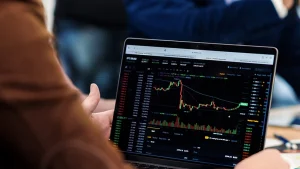
The foreign exchange market, commonly known as the FX market, is the largest financial market in the world. It entails trading in several currencies to generate profits. Foreign exchange traders frequently work with popular currency pairings, including EUR/USD, GBP/USD, and USD/JPY. But traders may also trade cross-pairs in the currency market. In this post, we’ll go over cross-pairs’ definition and operation.

USD INR trading is the purchase and sale of the United States dollar against India’s rupee in the foreign exchange market. In accordance with the economic relationship between the US and India, this includes a currency exchange between these two currencies. To anticipate exchange rate changes and potentially profit from price movements, traders and investors participate in USD INR trading.

An uncovered interest rate parity (UIRP) explains how foreign and domestic interest rates and currency exchange rates are related. Interest rate parity is based on the idea that, in a global economy, prices are the same everywhere (the law of one price) after interest rates and currency exchange rates are taken into account. Contrary to UIRP, covered interest rate parity involves the use of forward contracts to hedge currency exchange rates. Here is uncovered interest rate parity explained in detail.
You would undoubtedly have some foreign investments after having worked overseas as an NRI (non-resident Indian), such as your bank account balance, investments in shares, mutual funds, etc.

The currency market in India refers to the foreign exchange market, where participants buy and sell foreign currencies. The Indian rupee is the local currency of India and it is traded against major global currencies such as the US dollar, Euro, British pound, Japanese yen, and more. To trade in currency, you need to follow the regulations of the Reserve Bank of India (RBI), which is the central bank of the nation.

The foreign exchange market, commonly referred to as the Forex or currency market, is a global financial arena that enables individuals to trade and invest in foreign currencies. Over the years, this market has gained immense popularity not only in India but worldwide .However, navigating the intricacies of Forex trading requires a firm grasp of the minimum funds needed to get started. In this comprehensive guide, we will delve into the various aspects of minimum deposits for forex trading in India.

Once you have accumulated profits in a forex account, you can withdraw money. The linking of your bank account with your trading account also facilitates your access to cash through forex trading. If you wish to withdraw money from the forex trading account, you will have to fill out a form available online with your forex broker. The funds can be credited directly to your bank account if your forex trading account is linked to your bank account. Follow the guide in the article for a detailed explanation of how to withdraw money from the Forex account.

Currency trading, also known as foreign exchange or foreign exchange trading, involves buying and selling currencies from different countries with a view to making a profit. The United States dollar is the most widely traded currency in India, and the other currencies traded are the Euro, Japanese Yen, and British pound.

Inflation is increasing throughout the world. People began to question whether inflation would harm not only their purchasing power at home but also overseas through currency depreciation. It is unclear how inflation differentials affect exchange rates in the short term, However, sustained inflation in one country above the inflation rates of others will lead to the depreciation of that country’s currency.

Forex trading has the potential to be very successful and exciting. However, it also carries some risks. Here’s where hedging forex becomes useful. In financial markets like forex, hedging is a widely utilised strategy to reduce the risk of loss by initiating offset positions. Hedging forex may be a useful strategy to protect assets against sudden price swings and market volatility. Let’s discuss forex hedging in this post and examine how it can assist in reducing risk.

Foreign exchange trading, or forex trading, is the world’s biggest and most liquid financial market. It provides countless chances for people to benefit from the purchasing and selling of currencies. But just like any other job, trading forex requires commitment, education, and a calculated approach. This post shall throw light on some crucial forex trading tips. However, let’s first take a glance at an overview of forex trading. It shall help understand the currency trading tips better.

The exchange of currencies on a world market is known as forex trading, or foreign exchange trading. It is unfortunate that it is a common target for scams, even though it may be a reliable and rewarding kind of investment. The FX market is without a doubt the biggest financial market in the world. But if you trade forex from India or elsewhere, we advise getting the right advice from a reputable foreign exchange company like RemitX and being aware of a few warning signs of forex scams so that you don’t become a victim when you least expect it.
 Overview
 Leadership
 CSR
CSR Equal Steps
 ESG
ESG News Room
 Investor Relations
 ISO Certification
 Broking Services
 Margin Trading Facility
 Depository Services
 Mutual Fund
 Research Analysis
 Portfolio Management Services
 IPO
IPO Other Wealth Management Products
 Trading Platform
 VWAP
VWAP FII & DII Indicator
 Calculators
 Margin Calculator
 Dividend Yield Calculator
 Options Calculator
 CAGR Calculator
 Trade Cost Calculator
 Trading Brokerage
 Demat Account Charges
 Other Trading Charges
 Authorised Person
 Business Partner
 Independent Financial Distributor