
Gold is an integral part of Indian culture and traditions while also being one of the oldest investment instruments. In the history books, investing in gold has demonstrated to be a reliable hedge against inflation. That said, if you are looking at gold purely from an investment standpoint, the physical form dissuades some investors.
However, we live in the internet age; the financial system has designed a solution to solve the aforementioned issue. And today, you can invest in gold digitally through Sovereign Gold Bonds.
Online trading has turned out to be a common way for traders to participate in financial markets, offering convenience, availability, and low transaction costs. However, it is important to note that online trading involves risk and traders should be aware of the potential risks before investing their money as the commodity trade has a list of commodities to trade, you can explore each one of them properly.

Dealing with taxes is a constant part of trading. Investors usually take tremendous measures to reduce their tax obligations, and they typically conduct in-depth analysis to assess if an asset qualifies. Chartered accountants are frequently hired by individuals or businesses to seize opportunities and help them manage their taxes effectively. One asset that has always been tax-free to trade, is commodities. However, this isn’t the case anymore. Let’s find out more.

Commodity markets in India play a significant part in our country’s economy. These markets enable the trading of various commodities such as agricultural harvests, metals, and energy products. We have conducted research and narrowed down to some key roles that display the importance of the commodity market in India. Below, we have jotted down some of these key roles of the Indian commodity market.
Welcome to the fascinating world of commodities trading! The commodities market is a dynamic and complex environment that is impacted by a wide range of factors, such as supply and demand, geopolitical events, and weather patterns. Commodities range from coffee to gold, from soybeans to oil, and everything in between. The process of price determination, which is central to this market, is something that traders, investors, and producers must comprehend to make wise decisions about trading commodities. In this article, we will talk about the Price determination of a commodity. How is the price of a commodity determined? And What factors determine the price of a commodity?
This article will offer helpful insights into the intricate process of price determination of a commodity in this dynamic and ever-changing market, whether you are an experienced trader or someone simply interested in how the commodities market operates. To start with the same, do you know who can participate in the commodities market?

Commodity trading in the Indian stock market can be a complex investment opportunity, as it can also come with risks and potential losses. Commodity traders are exposed to various market fluctuations, such as changes in demand, geopolitical events, and currency movements. However, along with a precise planning and implementation of a proper plan, traders can short their losses and escalate their ROI. Some of the tips to avoid losses in commodity trading in the Indian stock market are stated underneath in this article.

Online trading has become an increasingly popular way to manage investments and purchase assets without ever leaving the comfort of your own home.
In a world that is becoming more digital by the day, it makes sense why people are turning towards online trading options as they offer convenience, low fees, and access to a wide variety of markets. Markets such as commodities which were not a new concept also seem to dominate the online trade.
● Commodity trading refers to the buying and selling of raw materials, such as gold, wheat or oil. This form of trading has been around for centuries, but with the advent of online platforms, it has become more accessible to everyday investors.
● The market comprises various asset classes such as metals, energy products, agricultural goods, and currencies.
● This diversification of investment in commodity trading provides opportunities for traders to hedge against inflation or economic turbulence by investing in different commodities simultaneously.
● In today’s times, traders have access to more sophisticated tools like futures contracts, options, and derivatives to trade in commodities
● In India, the two largest trading exchanges for commodities are Multi Commodity Exchange (MCX) and the National Commodity and Derivatives Exchange (NCDEX).
With the right understanding of the market and its trends, you can use online trading to build your personal wealth more efficiently and diversify your investment by understanding the benefits of the commodity market & pros and cons of doing commodity trading.
Equity Vs Commodity: Both equities and commodities are financial investment instruments/asset classes. They both hold real value. Simply put, the major difference between equity and commodity classes :
1. Equity is the company’s stock
2. Commodities are tangible items like copper, crude oil, coffee, etc.
So if you buy equity, you buy a company’s stock. Plus, if you’re reading this article, you probably at least have a gist of why equity/stocks interest people—to grow their wealth.
Conversely, when you are buying commodities, you’re buying a physical commodity; no, not really. In addition, when it comes to commodities, they are more interested in its hedging properties to protect their investments.
If you want a more in depth take on the equity vs commodity subject, consider reading the rest of the article.

Even in the most hostile cases, gold has performed better than other strategic assets. It is frequently purchased as part of a portfolio diversification strategy to lessen losses from other asset classes. Investors begin investing in gold in different forms after realizing its potential. In addition to being purchased in physical form, gold can be invested in Sovereign Gold Bonds (SGBs). These bonds are a better option than actual gold because they provide periodic interest and market value at maturity. Before you start thinking about SGBs as a possible investment, let’s learn how to invest in SGB online.
● Flipping the pages of history to compare the performance of gold to an index of stock markets gives exciting insights. You can notice gold prices increase whenever the stock market falls.
● Gold is used as a substitute for money. So, when the stock markets fail, people turn to investing in gold. The inverse link is significant because gold becomes the ideal hedge against market volatility.

Commodity trading deals with the trading of tangible items in the commodity market. If you’re a beginner looking to learn about commodity trading in India, this article focuses on agri or agro commodity trading. Agri commodities are one of the four main commodity categories traded in India.
Here’s some imperative info one must have about agro commodity trading
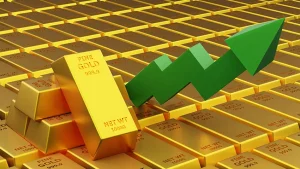
The choice between investing in equity and gold depends on a number of variables, including investment objectives, risk tolerance, and time horizon. Both gold and equity are very distinct asset classes with unique levels of risk and potential reward. Generally speaking, gold is regarded as a safer alternative than stocks, mainly due to gold’s lower volatility and propensity to hold its value over time.
 Overview
 Leadership
 CSR
CSR Equal Steps
 ESG
ESG News Room
 Investor Relations
 ISO Certification
 Broking Services
 Margin Trading Facility
 Depository Services
 Mutual Fund
 Research Analysis
 Portfolio Management Services
 IPO
IPO Other Wealth Management Products
 Trading Platform
 VWAP
VWAP FII & DII Indicator
 Calculators
 Margin Calculator
 Dividend Yield Calculator
 Options Calculator
 CAGR Calculator
 Trade Cost Calculator
 Trading Brokerage
 Demat Account Charges
 Other Trading Charges
 Authorised Person
 Business Partner
 Independent Financial Distributor